
Walnuts are a delicious, versatile, and nutrient-rich nut – well worth celebrating this Walnut Day! Mark 17 May with a healthy handful of walnuts, and reap the many nutrition and health benefits they offer.
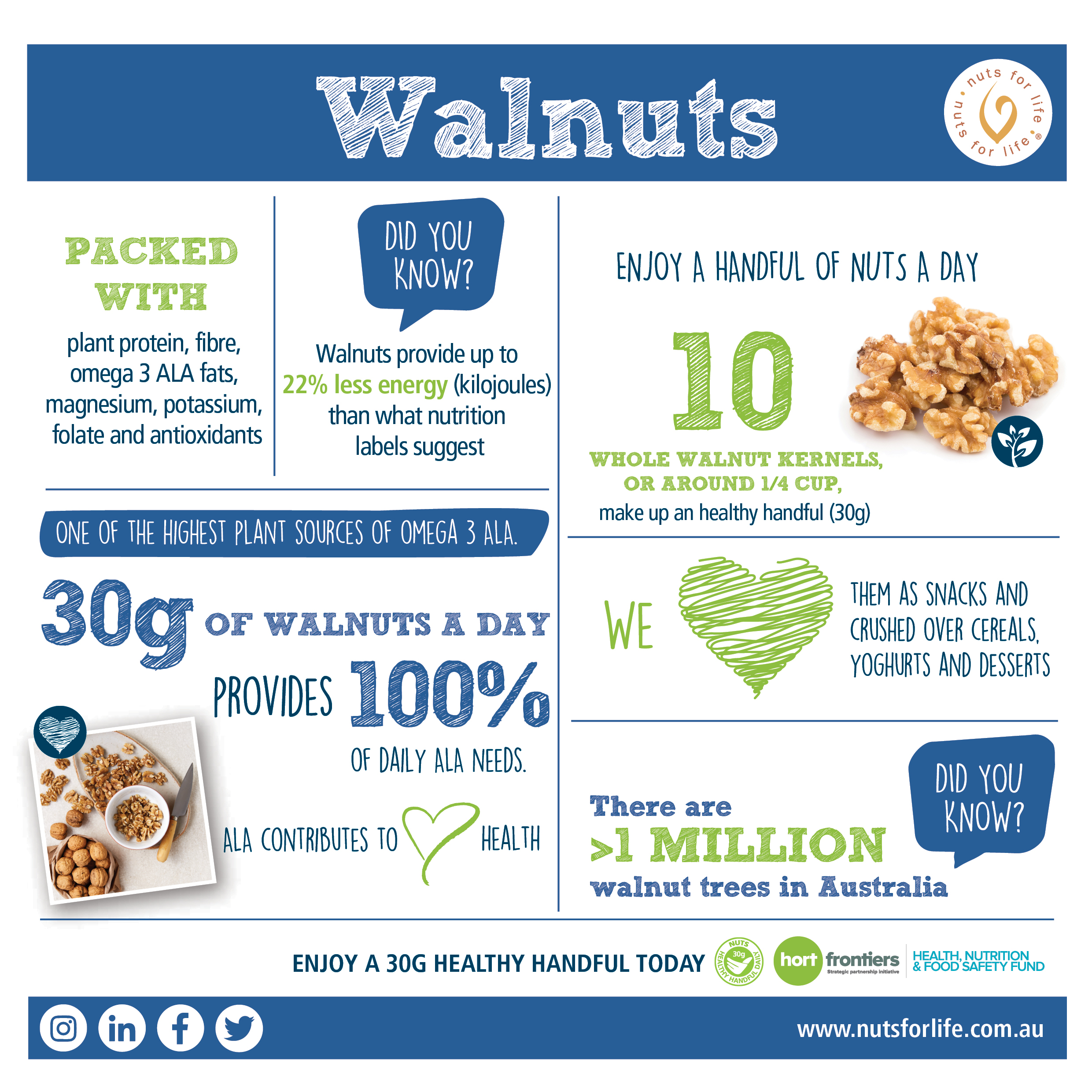
A 30g serve is around 9-10 whole walnuts
Five fast facts about walnuts:
- Walnuts are packed with plant protein and fibre. A healthy handful (30g) of walnuts contains 4.3g plant protein and 2.1g gut-loving fibre.
- Walnuts are one of the best plant sources of omega-3 fats, providing alpha-linolenic acid (ALA), which may help reduce inflammation and protect against chronic disease. A 30g handful (about ¼ cup or 9–10 walnuts) contains 1.9g of ALA — the highest omega-3 content of any nut!
- Walnuts are rich in essential vitamins and minerals, including vitamin E, a powerful antioxidant; magnesium, a nutrient that can help fight fatigue; potassium, for healthy nerve and muscle function; and folate, which helps make healthy red blood cells.
- Walnuts make a healthy AND affordable snack. A 30g handful of walnuts comes in at less than 80 cents.
- Walnuts do not increase body weight. Four review studies have reported no effect of walnuts on body weight. The most recent was a 2025 study that examined the findings of 32 earlier trials (1).
Brain boosters
Walnuts not only look like brains, but they are good for them too!
A recent study explored the link between walnut consumption and cognitive function in more than 3,600 US adults, aged 65 years or older. Those who ate walnuts had higher cognitive scores at baseline, than those who didn’t consume walnuts (2).
And another study, published in 2025, found that eating 50g of walnuts at breakfast improved reaction times on focus-related tasks throughout the day, in young adults (aged 18-30 years) (3).
Research suggests that the polyphenols, tocopherols, and polyunsaturated fats in walnuts may contribute to their benefits.
Walnuts and diet quality
A modelling study found replacing some meat with walnuts improved overall diet quality in US-based children, adolescents, and adults, who didn’t usually eat nuts (4).
It found that the partial replacement of meat with walnuts could result in:
- Increased intake of omega-3 (in the form of alpha linoleic acid, or ALA)
- Increased intake of fibre, magnesium, and copper
- Decreased intake of cholesterol
- Decreased vitamin B12 (though levels were still above the daily recommendation when walnuts replaced up to ~85g of meat)
- No significant change in iron.
Thanks to the crumbly texture of chopped walnuts, they make a handy addition, partial replacement, or replacement to regular mince, in a variety of recipes. The perfect way to get more plant foods into the day!
References
- Hadi, A., et al. Impact of walnut consumption on glycemic control and anthropometric indices: A systematic review and meta-analysis of randomized controlled trials. J Diabetes Metab Disord, 2025. 24:62.
- Bishop, N., & Zuniga, K. Investigating walnut consumption and cognitive trajectories in a representative sample of older US adults. Public Health Nutrition, 2021. 24(7):1741-52.
- Bell, L., et al. The impact of a walnut-rich breakfast on cognitive performance and brain activity throughout the day in healthy young adults: a crossover intervention trial. Food & Function, 2025. https://doi.org/10.1039/D4FO04832F
- Spence, LA., et al. A dietary model of partial meat replacement with walnuts demonstrates changes in the nutrient profile and quality of the United States population’s diet. Nutrients, 2023. 15:4518. https://doi.org/10.3390/nu15214518
Source: Nuts For Life